
We’ve all been there – scrolling through breathtaking farmhouse listings, mesmerized by the infinity pools, sprawling lawns, and the promise of a perfect escape. Whether you are planning a milestone birthday bash, a family reunion, or a corporate retreat, the visual appeal of a property usually takes center stage. However, the most vital feature of any farmhouse isn’t the poolside deck or the cinematic sunset view. It is a robust and visible fire safety plan.
The reality is that farmhouses are inherently higher-risk environments than city hotels. They frequently host large groups, involve high-intensity kitchen activity, and almost always feature the quintessential bonfire, all while being located in remote areas where emergency response times can be significantly delayed. Most accidents are entirely preventable. If you are scouting properties for a getaway, using a fire safety checklist to vet a listing before paying a deposit is the smartest move you can make for your peace of mind.
1. Fire Extinguishers
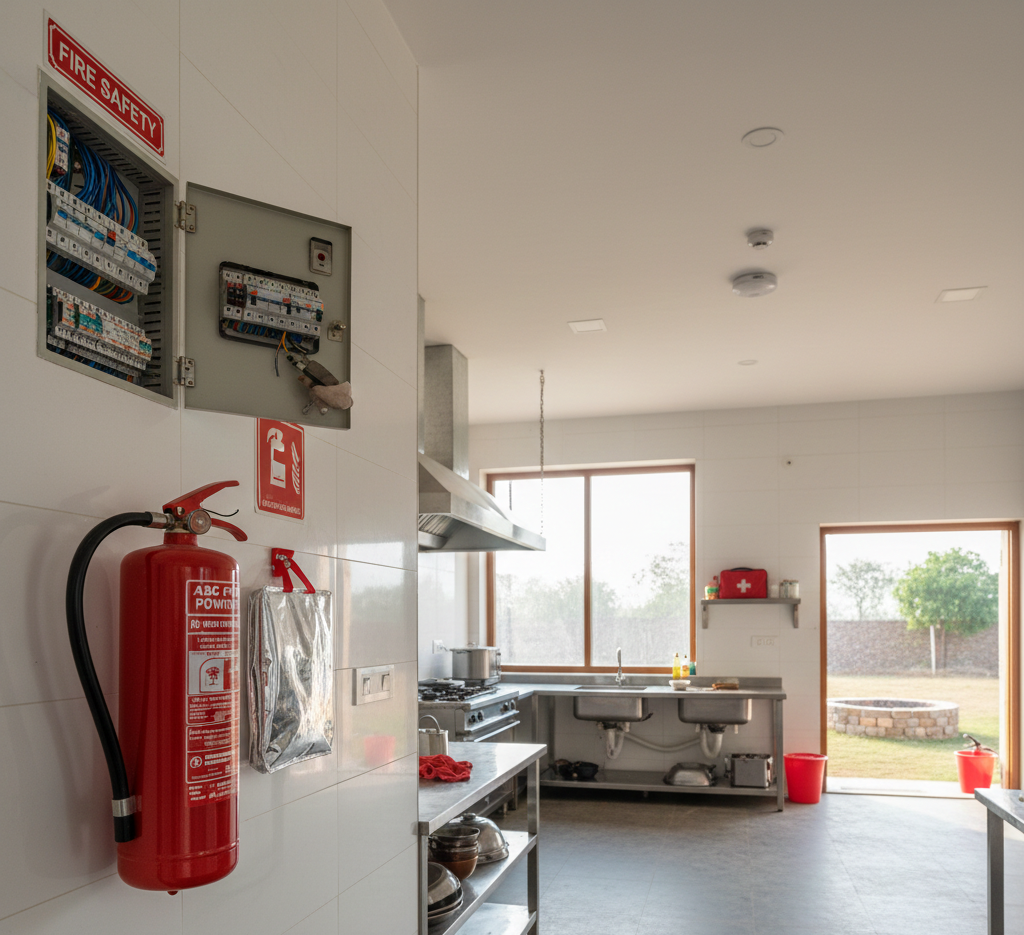
A fire extinguisher is only effective if it is functional, accessible, and appropriate for the hazard at hand. For a farmhouse getaway, you should look for ABC Powder extinguishers, as they are versatile enough to handle wood, paper, and electrical fires. At a minimum, a group of 10–20 people requires two units, while larger gatherings of 50+ need at least six, plus a professional hose reel system. An extinguisher tucked behind a curtain or locked in a distant shed is a major red flag, as they must be clearly visible and strategically placed in high-traffic areas like the kitchen and main halls to be truly life-saving.
2. Smoke Detectors
While fire moves fast, smoke moves faster, making functional detectors your only reliable defense in a farmhouse where heavy sleepers might be tucked away after a long night of celebration. For an overnight stay, smoke detectors are absolutely non-negotiable, supplemented by heat detectors in the kitchen to prevent false cooking alarms and units at staircase landings where smoke naturally rises. During your property walkthrough, keep an eye out for red flags like units covered in dust or paint, or detectors that are only present in common areas while bedrooms are left unprotected.
3. Electrical Safety
Electrical faults are the leading cause of farmhouse fires, particularly when the grid is strained by air conditioners, heavy-duty sound systems, and kitchen appliances. When inspecting a property, be on high alert for danger signs such as exposed or frayed wires, multiple extension boards together, or sockets that feel warm to the touch, as each of these is a significant fire risk. A safe property should have a main panel equipped with an ELCB or RCCB (Earth Leakage Circuit Breaker), which instantly trips the power during a leakage to prevent both fire and electrocution. Additionally, verify that high-load appliances like ACs and geysers are plugged into heavy-duty 16A sockets rather than standard light-duty outlets. Ensuring the circuit breakers are clearly labeled and the wiring is tidy isn’t just about aesthetics. It’s proof that the property’s electrical system can handle the energy of a full group without a catastrophic failure.
4. Kitchen Fire Safety
Farmhouse kitchens are high-intensity zones where the gas setup must be pristine, whether you’re hosting a professional caterer or a DIY BBQ. To ensure safety, LPG cylinders should always be housed in a ventilated outdoor cabinet rather than inside the kitchen or under the sink, and the rubber hoses must be free of cracks or makeshift tape repairs. One of the most important yet overlooked tools is a fire blanket mounted near the stove can smother a grease fire in seconds, which is something a standard water-based approach would only worsen. If you smell even a faint hint of gas during your tour, insist on checking the joints to rule out leaks before the party begins.
5. Emergency Exits & Evacuation Routes
If a fire breaks out, the goal is to evacuate everyone in under two minutes, a timeline where many farmhouse designs unfortunately fail due to layout quirks. Every habitable building must adhere to the ‘Two-Exit’ Rule, ensuring that if one path is compromised by fire, a secondary, unobstructed route is available. Furthermore, hallways must be kept entirely clear of extra mattresses, heavy planters, or decorative furniture; in a dark, smoke-filled environment, these common farmhouse items quickly transform from amenities into lethal tripping hazards.
6. Bonfire & Outdoor Fire Safety
A bonfire is often the centerpiece of a farmhouse getaway, but without proper management, it can quickly transition from the highlight of the night to a major hazard. To ensure safety, the fire must be contained in a stone-lined pit or metal drum at least 50cm deep, situated within a 5m clear radius that is entirely free of dry grass, fallen leaves, or low-hanging branches. Always keep a dedicated sand bucket or fire extinguisher within 3m of the pit for immediate intervention. You should strictly avoid properties that allow fires on open grass patches or near plastic furniture. In a rural setting, a single gust of wind can carry embers onto a dry lawn or a thatched roof in seconds, turning a cozy gathering into a disaster.
7. First Aid & Emergency Preparedness
In an emergency, the first ten minutes are the most critical, and you simply cannot rely on a pharmacy that might be 20km away. Every farmhouse should provide a Mandatory Medical Kit that is stocked for immediate response, specifically featuring burn treatments like Silverex or Silverdene cream, which are essential for kitchen or bonfire mishaps. Beyond standard antiseptics like gauze and adhesive tape, the kit must include pain management and antihistamines to handle everything from minor injuries to unexpected allergic reactions. Most importantly, a visible, printed list of emergency contacts, including the nearest hospital (ideally within 15 minutes) and local ambulance numbers, must be displayed prominently. If the host can’t point to a well-stocked kit and a clear medical plan, the property isn’t ready for your group.
8. Power Backup Safety
Inverters and generators are essential for the uninterrupted farmhouse experience, but their maintenance and placement are critical to your safety. Inverter batteries release flammable and toxic gases during charging. Therefore, they must be housed in a well-ventilated area, never tucked inside a bedroom or a cramped, closed cupboard where gases can accumulate to dangerous levels.
For generators, the rule is even stricter: they must be installed outdoors only to prevent carbon monoxide poisoning. Furthermore, fuel storage is a major fire risk; ensure that any spare petrol or diesel is kept in approved containers at least 20m away from the main building and the bonfire area. A safe power setup is one that remains invisible and odourless throughout your stay.
Conclusion
Beautiful lawns, crystal-clear pools, and spacious bedrooms are wonderful, but they lose all value if your group faces an emergency they aren’t prepared for. A legendary celebration is only successful if it is also a safe one. Your friends and family deserve a venue where the safety standards are just as impressive as the stunning photos. By spending 30 minutes on due diligence and using this checklist, you ensure that your choice of farmhouse is backed by substance, not just aesthetics.
Ultimately, booking a property with a solid fire and medical plan is the most responsible way to host. It allows you to relax and fully immerse yourself in the festivities, knowing that you’ve prioritized the well-being of your guests above all else. Smart booking transforms a great weekend into a truly unforgettable experience, providing the peace of mind that allows the celebrations to happen without a hitch.