Organizing a getaway for a massive family reunion, a milestone celebration, or a corporate offsite is entirely different than a quiet family weekend. When your guest count climbs to 20, 30, or even 45 people, the logistical complexity doesn’t just double, it grows exponentially. While a small group of six can easily navigate minor inconveniences, attempting to squeeze 25 people into a space with insufficient facilities and no power backup is a nightmare of 12-hour shower queues and parking chaos.
If you are currently searching for the perfect large-group farmhouse or seeking expert accommodation tips to handle a crowd, you know that the stakes are high. One small oversight can lead to expensive last-minute surprises that dampen the spirit of the event. This comprehensive 2026 checklist serves as your essential guide, ensuring that your venue selection is as robust as your guest list and that your only focus remains on the people you’re celebrating with.
1. Sleeping Capacity
To avoid a logistical disaster, you can apply an Actual Capacity Formula by multiplying the number of bedrooms by two and adding the confirmed count of extra mattresses (also multiplied by two). If a four-bedroom villa claims to host 30 people but only offers five extra mattresses, the realistic limit is 18 guests. Anything beyond that number means your guests will be sleeping on sofas or the floor, which can quickly sour the mood of a premium getaway.
To ensure guest satisfaction, it is helpful to categorize the stay by comfort level based on density. A comfortable farmhouse stay allows for two people per bedroom with a spare room for luggage or children, while a tight arrangement places three people per room using one extra mattress. You should actively avoid crisis levels such as four or more adults per room, as this density almost inevitably leads to group conflict and poor sleep quality. Be on high alert for red flags in listings, such as vague promises of extra bedding without a specific count or photos that fail to show the full number of bedrooms advertised for a large group.
2. Washrooms
Nothing derails a morning itinerary faster than a washroom queue, as it is arguably the most overlooked logistical hurdle in group bookings. To maintain a smooth schedule and keep guest spirits high, you must adhere to the Golden Rule of one washroom for every 6–8 people. For a group of 20, you require at least three functional washrooms, while a crowd of 40 demands a minimum of six. Furthermore, ensure there are dedicated outdoor or common-area washrooms for lawn events to prevent guests from trekking through private sleeping quarters, which is both disruptive and inconvenient for those trying to rest.
Beyond the sheer number of toilets, you must verify the specific quality and accessibility of these facilities during your booking process. Never assume basic amenities. Ask specifically if every washroom is equipped with a dedicated geyser for hot water and if all doors lock properly to ensure privacy for mixed groups. For the comfort of elderly guests, confirm that the property features western-style toilets rather than traditional ones. Verifying these details helps in avoiding a frustrating logistical nightmare.
3. Parking Facility
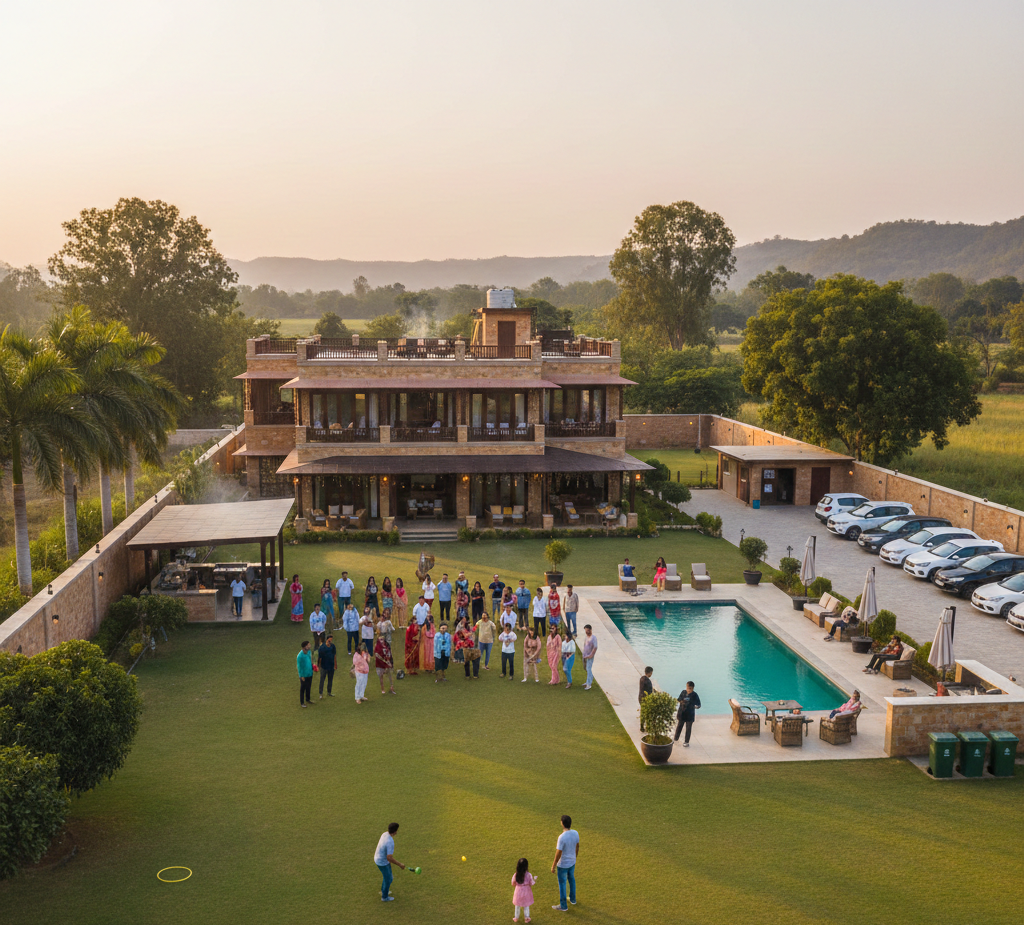
When hosting a large group at a farmhouse stay, parking logistics can quickly become a headache if the property lacks a secure, gated compound. Using the standard ratio of one parking slot per 4–5 people, a group of 45 will require space for at least 10 vehicles within the property walls to avoid guests parking on narrow rural roads or busy highways. Before booking, verify that the parking area is paved to prevent cars from getting stuck in the mud after rain, and ensure there is sufficient room for multiple vehicles to manoeuvre and turn around comfortably. Finally, prioritize well-lit zones to ensure guest safety and prevent accidental damage during late-night arrivals or departures.
4. Kitchen Capacity
When catering for a large crowd, a standard home kitchen simply won’t suffice. For a group of 30 or more, verify that the property offers a four-burner gas stove for parallel cooking and at least two large refrigerators, one dedicated to fresh ingredients and another exclusively for cold drinks and ice. It is equally vital to ensure the venue provides enough utensils and cutlery that can handle bulk quantities in a single go, along with a high-output RO water filtration system to keep everyone hydrated and healthy. Remember that a group of 25 typically requires a team of four (two cooks and two helpers). If the kitchen footprint is too small for them to work simultaneously, you can expect your meals to be delayed by several hours regardless of how talented the staff is.
5. Power Backup
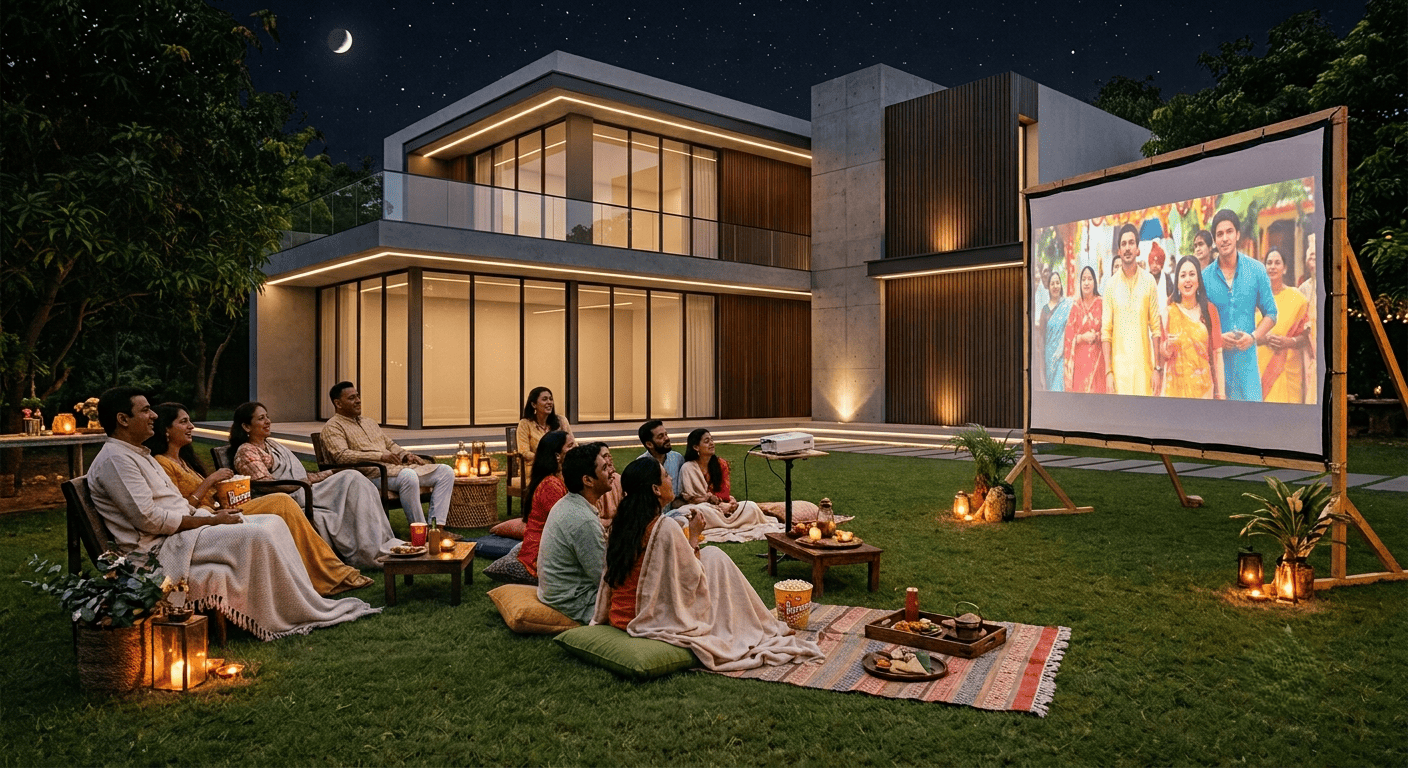
Rural areas are prone to power fluctuations, and for a large group, a basic home inverter simply won’t cut it. If you are planning a specialized event like a movie night, verify there is a dedicated line for projectors and soundbars to prevent tripping the main breaker. A critical confirmation tip is to ask the host exactly which circuits are connected to the backup. In many farmhouses, high-load appliances like AC units and pool pumps are excluded from the inverter line, which could leave your guests disappointed if the grid goes down.
6. Indoor + Outdoor Space Ratio
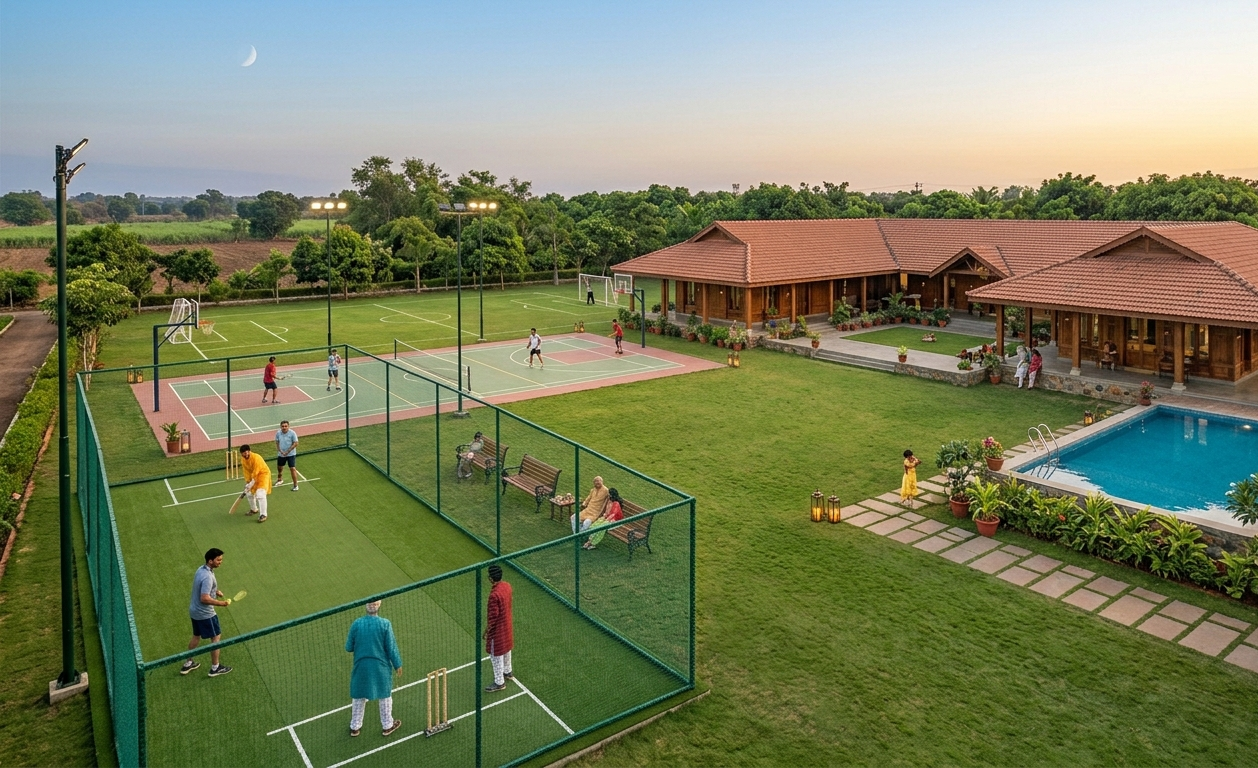
True comfort for a large group is measured by ‘breathing room’ rather than just total square footage. You need space where guests can spread out without feeling on top of one another. For outdoor activities like group cricket or a 30-person family photo, a clear and flat lawn is essential. To prevent your vacation from feeling like a crowded elevator, aim for at least 30 square feet of indoor common space per person. So always ensure the indoor halls are as spacious as the lawns of the farmhouse.
7. Water Supply
Water is an essential in a farmhouse, yet it is often the first resource to fail during large group stays. 25 people taking standard 10-minute showers results in over four hours of continuous water consumption, which can easily drain a standard residential tank. To prevent the taps from running dry before the tenth person finishes their morning routine, ensure the property has a reliable borewell or a massive overhead tank. Furthermore, confirm that the geysers are high-capacity models.
8. Safety & Security for Large Groups
When you have a group of 20 or more navigating a rural property after dark, security becomes a paramount concern. A secure boundary wall or fencing is non-negotiable for keeping the premises private and safe. To prevent accidents on unfamiliar terrain, ensure the property is equipped with adequate outdoor lighting and that a caretaker is on-site 24/7 in separate quarters to handle technical emergencies or medical needs. Given that large gatherings often involve high-risk elements like BBQs and bonfires, verify the location of fire extinguishers before the festivities begin. Finally, if children are part of your group, check for unguarded ponds or steep drops beforehand for a family-oriented farmhouse stay.
9. Waste Management
To prevent your retreat from becoming a magnet for pests, you must verify that the host provides high-capacity, segregated bins for wet and dry trash. More importantly, confirm their daily waste pickup policy, as leaving dozens of bags of organic waste to sit in the sun for 48 hours is a guaranteed way to ruin the ambience and the local environment. A responsible venue should have a clear system for handling the aftermath of a large celebration, ensuring the property stays as pristine on day two as it was when you arrived.
10. House Rules Clarity
Ambiguity is the primary source of conflict in farmhouse rentals, so it is vital to get specific policies in writing, via WhatsApp or email, well before you transfer any funds. Ensure you have absolute clarity on music timing, as most rural belts strictly enforce a 10:00 PM or 11:00 PM cutoff for loud speakers to avoid local disturbances. You must also verify the alcohol policy to avoid any consequences, and confirm the exact per-head cost for any last-minute guests who might join the group. Finally, a 50% advance and a damage deposit is standard. Ensure the specific refund conditions are documented, knowing exactly what constitutes ‘damage’ versus ‘standard wear and tear’ for a smooth check-out process.
Conclusion
Ultimately, a large group getaway serves as a high-stakes investment. It can either become the most cherished bonding experience of the year or a source of persistent stress and complaints. The deciding factor is never luck, but rather the depth of your preparation. When the farmhouse infrastructure is robust and the rules are clear, you create a space where your guests can stop worrying about the ‘how’ and start focusing entirely on the ‘what’ – the people, the milestones, and the memories that make the trip worthwhile.